 Frisco
 Roof Leak Repair in Frisco
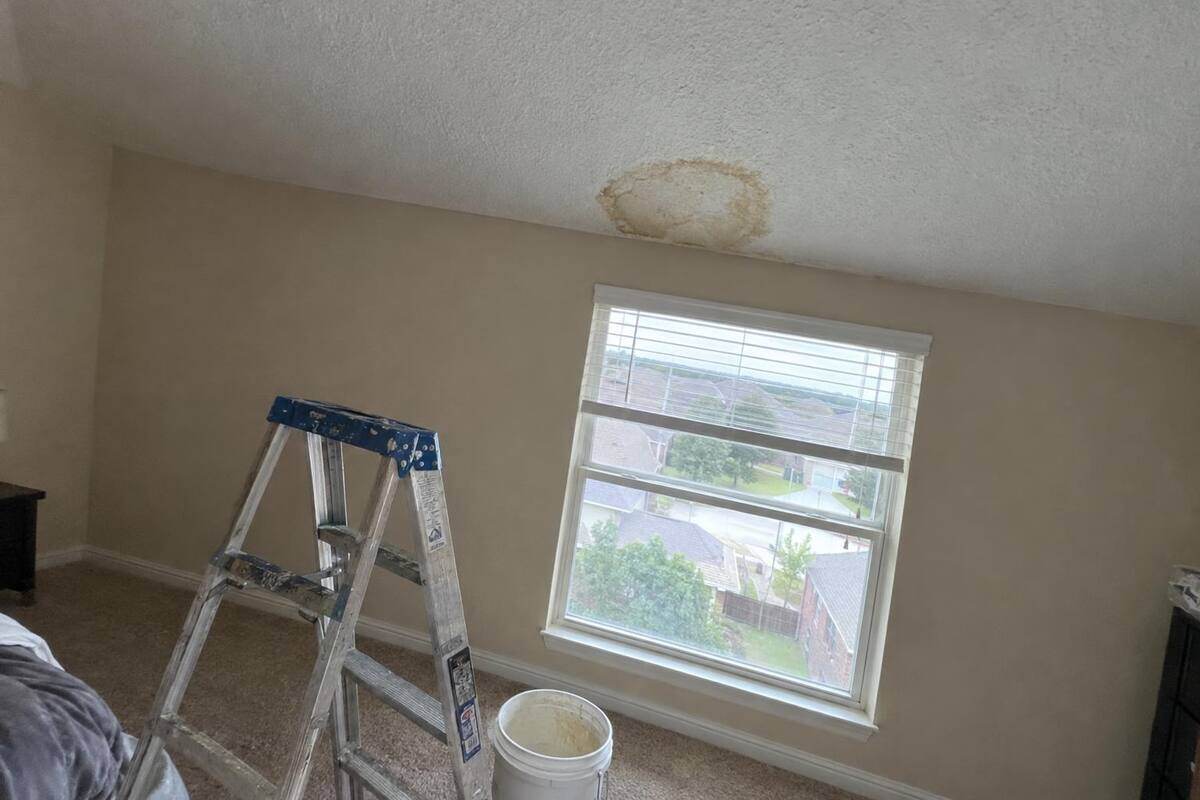
A stain on an upstairs ceiling after a rain is the most common reason anyone in Frisco calls a roofer. The hard part is not the fix. It is finding the entry point on a roof with six slopes, two dormers and a chimney chase.
In Brief
Water enters at one place and shows up at another. On a two-story house the path from roof to ceiling can be ten feet sideways along a rafter or a duct.
The usual entries on a 2000s Frisco roof are a pipe boot, step flashing where a roof meets a siding wall or chimney chase, a valley, or nails backing out of the deck.
The repair is usually small once found. The finding is the job.
Where Leaks Start on a Frisco House
- Pipe boots. The rubber collar around a plumbing vent splits after fifteen to twenty years in the sun. On a 2005 house, that is now.
- Step flashing behind upper-story siding. Where a lower roof slope runs into the fiber cement wall of a second story, the metal behind the boards has to be lapped correctly. Builders in a hurry did not always do that, and siding replaced without redoing the flashing makes it worse.
- Chimney chases. A framed, sided box around a gas fireplace flue, common on Frisco houses, with a cap on top and flashing at the base. Both fail.
- Valleys and dead valleys where a dormer or a lower roof creates a spot water cannot leave quickly.
- Nail pops where a deck nail backs out and lifts the shingle above it a quarter inch.
- Skylights, if the house has them, at the curb flashing and the glazing seal.
How the Search Goes
A contractor starts inside, in the attic if there is access, tracing the stain upward along the framing to a wet spot on the underside of the deck, then outside to the same spot on the roof. Where the attic is finished or inaccessible, the search is from the outside: every penetration and flashing line uphill of the stain, checked by hand, then a hose test if the dry inspection finds nothing.
A leak that only shows in wind-driven rain from one direction points at a flashing lap or a vent facing that way. A leak that only shows in long soaking rain points at a slow path such as a nail pop or a cracked boot.
General trade practice. No local source is claimed for this section.
Act Before the Ceiling Does
A stain the size of a dinner plate is a drywall patch and some paint. The same leak left through a wet spring in Collin County is sagging drywall, wet insulation and the beginning of mold in the attic. Frisco's hail record shows two of its three dated storms came in March; a roof with a small leak going into spring storm season should be looked at before the storms, not after.
If the leak follows a hailstorm, read the storm record and the hail inspection page.
Not This Site's Role
This site does not inspect or repair anything; the contractor it sends does.
It has no role in filing, negotiating, adjusting or settling insurance claims, and it does not say whether a leak is or is not a covered event. That is for your insurer or agent.
Questions on This Page
The stain is dry now. Is the leak gone?
No. The stain dries between rains; the entry point does not heal. A dry stain is a chance to get it fixed before the next storm.
Can a leak be fixed in winter?
Yes, on a dry day above freezing. Sealants and shingle adhesive need some warmth to set, so a contractor may wait a day for the right weather.
Is a leak a sign the whole roof is finished?
Not by itself. One failed boot on a sound 2012 roof is a boot. Several leaks on a 2003 roof with worn shingles are a different conversation; see the replacement page.
Should I open the ceiling myself?
Poking a small drain hole in a bulging, water-filled drywall spot with a bucket under it prevents a collapse. Beyond that, leave the ceiling to a drywall contractor after the roof is fixed.
Say Which Room and Which Rain
Those two facts narrow the search before anyone climbs.
Call (469) 535-7696 Use the Form